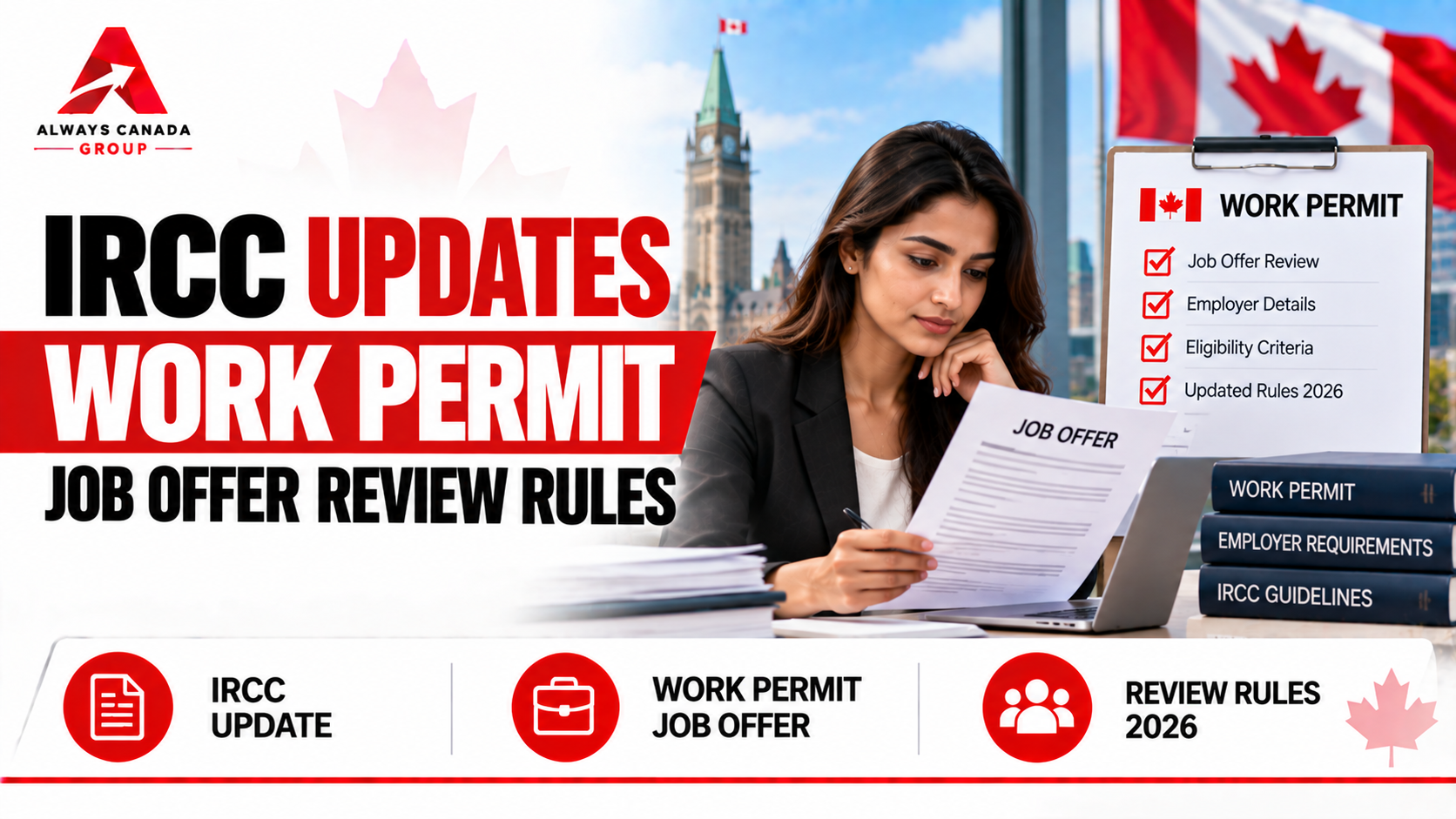
Immigration, Refugees and Citizenship Canada has updated its operational guidance concerning the IRCC work permit job offer rules. The instructions explain how officers assess the genuineness of employment offers supporting employer-specific work permit applications.
The official IRCC page was updated on September 17, 2026. The change received wider public attention after being reported by CIC News on September 30, 2026.
What Changed in the IRCC Work Permit Job Offer Rules?
The updated guidance contains a dedicated section explaining what an officer should do when there are concerns about whether a job offer is genuine.
IRCC instructs officers to send a procedural fairness letter to the applicant when further evidence is required. The letter must identify the specific concerns and explain which job-offer genuineness factors are in question.
The applicant must also be informed that the employer should send the requested evidence directly to IRCC within 15 days or within the applicable processing office’s standard response period.
IRCC’s instructions direct the officer to set a follow-up date an additional 30 days after the employer’s response deadline. This is intended to allow time for documents submitted through the IRCC web form to be attached to the application.
Who Is Affected by the Updated Guidance?
The guidance applies to employer-specific work permit applications, including renewals, processed through:
- The Temporary Foreign Worker Program, where a positive Labour Market Impact Assessment may be required; and
- The International Mobility Program, which includes qualifying LMIA-exempt employer-specific work permits.
The genuineness assessment does not apply to open work permits because an open work permit is not tied to one specific employer or job offer.
How Does IRCC Assess Whether a Job Offer Is Genuine?
For employer-specific work permits, officers assess four principal factors:
- Whether the employer is actively engaged in the business, subject to the exception for a live-in caregiver position;
- Whether the job offer is consistent with the employer’s reasonable employment needs;
- Whether the employer can reasonably fulfil the wages, hours, benefits and other terms of the offer; and
- Whether the employer or authorized recruiter has complied with applicable employment and recruitment laws.
A concern about any one of these factors may lead IRCC to request further evidence. If the officer is ultimately not satisfied that the offer is genuine, the work permit application may be refused.
What Must the Procedural Fairness Letter Explain?
According to IRCC’s instructions, the letter must identify the relevant genuineness concern and explain why the officer has that concern.
The employer may be asked to provide information such as:
- Business registration, licences or permits;
- Tax or financial documents;
- Evidence that the business is actively providing goods or services;
- Payroll or employee records;
- Contracts demonstrating ongoing business activity; or
- Evidence that the employer can pay the offered wage and provide the stated working conditions.
The precise documents required will depend on the officer’s concerns and the circumstances of the employer and application.
Clarifications for Home-Based Businesses and Employment Contracts
The guidance recognizes that operating from a residential address does not automatically make a job offer non-genuine. A home-based business may be legitimate when its type of goods or services is consistent with that operating model.
However, the employer must still provide sufficient evidence that the business is active and can meet the terms of the employment offer.
For offers submitted through the Employer Portal under the International Mobility Program, an employment contract is not automatically required. If an applicant submits a contract or employment letter, an officer may compare it with the information contained in the Employer Portal submission.
What Should Applicants and Employers Do?
Applicants
- Ensure the work permit application matches the employer’s offer, LMIA or Employer Portal submission.
- Check the job title, duties, wage, location and working conditions carefully.
- Read any procedural fairness letter immediately and share it with the employer.
- Do not miss the response deadline stated in the letter.
Employers
- Keep current business, payroll, tax, licence and operating records.
- Ensure the offered position is reasonable for the size and activities of the business.
- Be prepared to demonstrate the ability to pay the promised wage.
- Submit requested evidence directly to IRCC using the method specified in the letter.
- Include accurate applicant and application information with the response.
IRCC Work Permit Job Offer Rules: Key Takeaway
The updated IRCC work permit job offer rules provide clearer procedures when an officer questions an employment offer. They do not guarantee approval or prevent IRCC from refusing an application when the evidence does not establish that the job offer is genuine.
Applicants can review our Canadian work permit services and our earlier article about the pending LMIA work permit deadline.
Read the complete official IRCC job-offer genuineness instructions.
Disclaimer: This article provides general information and does not constitute legal or immigration advice. Program instructions and processing procedures can change. Applicants should verify current IRCC requirements and obtain advice appropriate to their circumstances.