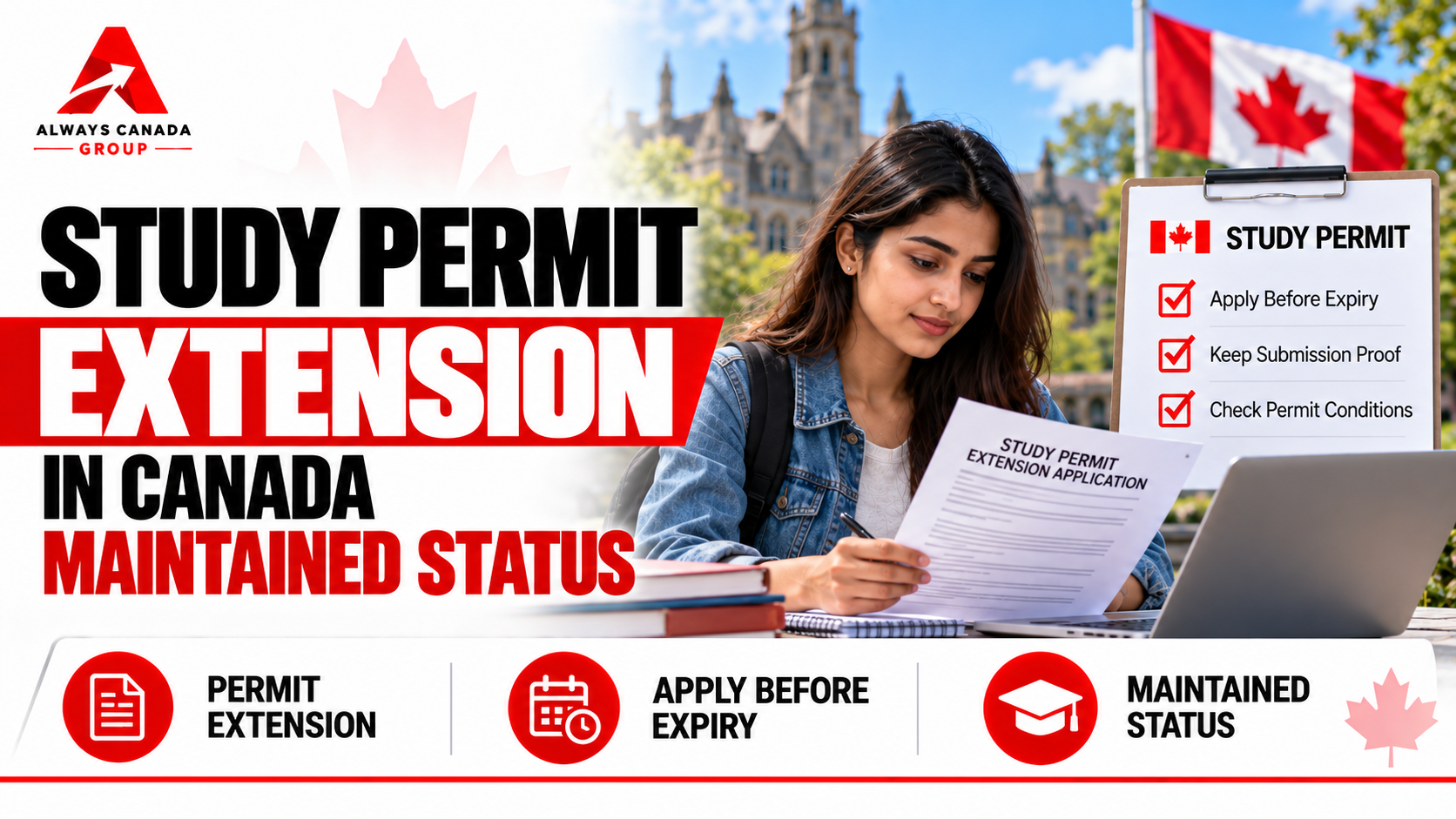
A study permit extension in Canada can help eligible international students continue their studies when their current permit is approaching expiry. Applying before your permit expires may allow you to remain in Canada and continue studying while Immigration, Refugees and Citizenship Canada (IRCC) processes your application.
This is known as maintained status. It comes with conditions, particularly if you leave Canada, change schools or apply after your permit expires.
What Is Maintained Status?
Maintained status allows an eligible temporary resident who applies to extend their stay before their current authorization expires to remain in Canada while a decision is pending.
If you apply to extend your study permit before it expires, you can generally continue studying under its existing conditions while you wait, provided you remain in Canada.
Simply creating an online account or saving an application does not mean you have submitted it. Keep your submission confirmation and payment receipt.
When to Apply for a Study Permit Extension in Canada
IRCC instructs students continuing at the same school to apply at least 30 days before their permit expires. Applying earlier gives you more time to address missing documents or technical problems.
Check your passport too. IRCC cannot extend your study permit beyond your passport’s expiry date.
The 30-day application window should not be confused with the maintained-status rule: submitting before the current permit expires is essential to relying on maintained status.
What If Your Permit Has Already Expired?
If you submitted an extension application before expiry and remain eligible, you may continue studying while IRCC makes its decision.
If you did not apply before expiry, you cannot rely on maintained status. You must stop studying and assess whether you qualify to restore your status.
Eligible students generally have 90 days after losing their status to apply for restoration. Restoration is not automatic, and you cannot resume studying until your status is restored and a new study permit is issued.
Consult IRCC’s instructions for an expired study permit before taking further steps.
Can You Travel While Your Extension Is Pending?
Leaving Canada can affect your ability to continue studying under maintained status.
If your original permit has expired and your extension is still pending, you may be admitted back as a visitor if you meet the entry requirements. You cannot resume studying until your extension is approved.
Your passport and any required visitor visa or electronic travel authorization must also be considered. Re-entry is not guaranteed.
Read IRCC’s guidance on travel during a study permit extension before booking a trip.
Changing Schools Requires a Separate Check
An extension application does not automatically authorize you to start at a different post-secondary designated learning institution.
IRCC generally requires approval of your study permit for the new institution before you begin there, with limited exceptions. Review the applicable school-change instructions rather than assuming maintained status permits the transfer.
Practical Checklist Before You Apply
- Confirm your permit and passport expiry dates.
- Check whether you are continuing at the same institution.
- Follow the document checklist provided for your application.
- Review your enrolment information and supporting evidence.
- Submit the application and keep proof of submission.
- Continue meeting your existing permit conditions.
- Monitor your IRCC account for requests and decisions.
Permission to work requires its own assessment. A pending study permit extension does not create unrestricted work authorization.
Plan Your Next Steps
A study permit extension in Canada should be planned before your current permit expires. Maintained status can support continued studies while you remain in Canada, but travel, school changes and late applications require careful review.
For related guidance, visit Always Canada Group’s study permit page. Verify current requirements through IRCC’s official extension instructions.
This guide provides general information, not legal advice. Eligibility depends on your circumstances. Check current IRCC instructions before applying or travelling.